Reading › N3 › 秋の流れ星、22日ごろに一番多くなる
秋の流れ星、22日ごろに一番多くなる
Written for learners with AI assistance, based on: 国立天文台 · original source ↗
In the reader you can tap any word to see its reading, meaning and JLPT level, save the ones you don't know, and quiz yourself on them.
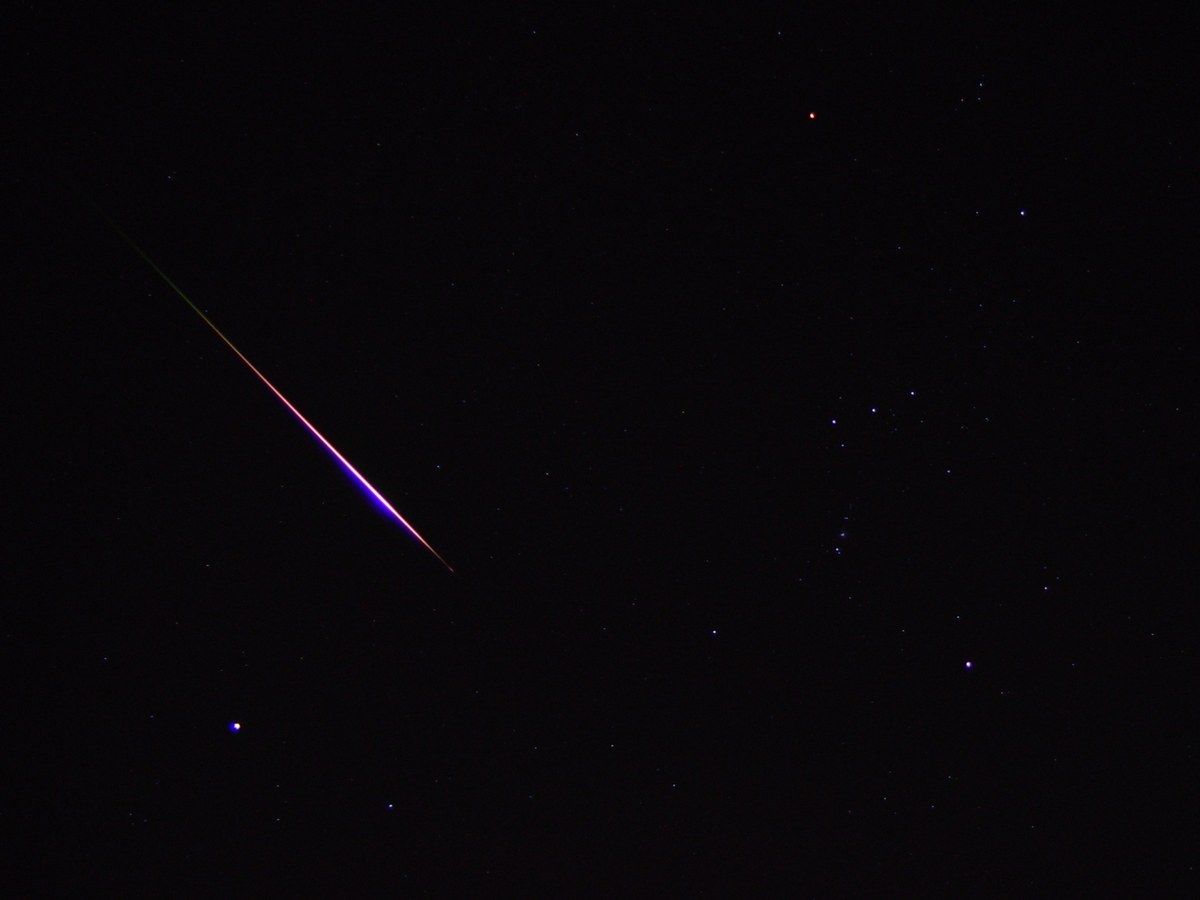
Open in the reader秋の夜空で、流れ星を見るチャンスが来る。国立天文台によると、「オリオン座流星群」は、10月22日ごろに流れ星が一番多くなる。この日を中心にした数日間の、夜中から夜明け前までが、見るのにいい時間だという。
流れ星は、どうやってできるのだろうか。宇宙には、大きさが1ミリメートルから数センチメートル程度の小さなチリがある。そのチリが地球の大気に入ってきて、光る現象が流れ星だ。
オリオン座流星群のもとは、有名なハレー彗星が残したチリだ。ハレー彗星は、通った道にチリを残していく。地球は毎年ほぼ同じ時期にその道を横切るので、チリの集団が大気に入ってきて、たくさんの流れ星が現れる。
このとき、流れ星は空のある一点から出てくるように見える。その点がオリオン座の方向にあるので、「オリオン座流星群」と呼ばれている。
2006年には、急に1時間に60個以上の流れ星が見られた。今年は、1時間に5個から10個程度の流れ星が見られそうだ。月の明かりがあると、暗い流れ星が見えなくなってしまう。19日には、月が半分の形になる。その月が夜明け前に沈んだ後は、条件がいいそうだ。
見るときは、街の明かりが少なく、空が広く見える場所を選ぼう。流れ星は、どの方向にも現れる。だから、一つの方向だけを見る必要はない。空の全体をゆっくり見るといい。また、明るい部屋から外に出たばかりの目は、まだ暗さに慣れていない。国立天文台は、すぐにあきらめないで、最低でも15分は見続けるように言っている。
Words in this article
The 48 words at JLPT N3 or above, and the specialist words that are on no JLPT list.
| Word | Reading | Meaning | JLPT |
|---|---|---|---|
| 流れ星 | ながれぼし | shooting star; meteor | Not on JLPT lists |
| オリオン座流星群 | オリオンざりゅうせいぐん | the Orionid meteor shower | Not on JLPT lists |
| オリオン座 | オリオンざ | Orion (the constellation) | Not on JLPT lists |
| ハレー彗星 | ハレーすいせい | Halley's Comet | Not on JLPT lists |
| チリ | dust; tiny bits of dust | Not on JLPT lists | |
| 国立天文台 | こくりつてんもんだい | National Astronomical Observatory of Japan | Not on JLPT lists |
| 夜空 | よぞら | night sky | Not on JLPT lists |
| チャンス | chance; opportunity | N3 | |
| 中心 | ちゅうしん | center | N3 |
| 数日間 | すうじつかん | several days | Not on JLPT lists |
| 夜中 | よなか | the middle of the night; late at night | N3 |
| 夜明け | よあけ | dawn; daybreak | N3 |
| どうやって | how; in what way | Not on JLPT lists | |
| のだろうか | I wonder (...?) | Not on JLPT lists | |
| 宇宙 | うちゅう | space; the universe | N3 |
| 数センチメートル | すうセンチメートル | a few centimeters | Not on JLPT lists |
| 程度 | ていど | about; to the extent of | N3 |
| 地球 | ちきゅう | the earth | N3 |
| 大気 | たいき | the atmosphere | N3 |
| 入ってきて | はいってきて | coming in, and (from 入ってくる) | Not on JLPT lists |
| 現象 | げんしょう | phenomenon | N3 |
| もと | origin; source | Not on JLPT lists | |
| 残していく | のこしていく | to leave behind as it goes (from 残す) | Not on JLPT lists |
| ほぼ | almost; nearly | N3 | |
| 時期 | じき | time; season; period | N3 |
| 横切る | よこぎる | to cross; to cut across | N3 |
| 集団 | しゅうだん | group; mass | N3 |
| 現れる | あらわれる | to appear | N3 |
| 残した | のこした | left behind (past of 残す) | N3 from 残す |
| とき | time; when | Not on JLPT lists | |
| 出てくる | でてくる | to come out | Not on JLPT lists |
| 一点 | いってん | one point; a single point | Not on JLPT lists |
| 方向 | ほうこう | direction | N3 |
| 急に | きゅうに | suddenly | N3 |
| 見られそう | みられそう | likely to be seen (from 見る) | Not on JLPT lists |
| 明かり | あかり | light | N3 |
| 見えなくなってしまう | みえなくなってしまう | end up not being visible (from 見える) | Not on JLPT lists |
| 沈んだ | しずんだ | set; sank (past of 沈む) | N3 from 沈む |
| 条件 | じょうけん | conditions | N3 |
| 街 | まち | town; city streets | N3 |
| 選ぼう | えらぼう | let's choose (from 選ぶ) | Not on JLPT lists |
| ない | there is no; not | Not on JLPT lists | |
| 全体 | ぜんたい | the whole | N3 |
| といい | it is good to (...) | Not on JLPT lists | |
| あきらめないで | without giving up (from あきらめる) | Not on JLPT lists | |
| 最低 | さいてい | at least; minimum | N3 |
| 見続ける | みつづける | to keep watching | Not on JLPT lists |
| その道 | そのみち | that path | Not on JLPT lists |
82 more words from lower levels, plus names, numbers and grammar
| Word | Reading | Meaning | JLPT |
|---|---|---|---|
| 秋 | あき | autumn; fall | N5 |
| 空 | そら | sky | N5 |
| 見る | みる | to see; to watch | N5 |
| 来る | くる | to come | N5 |
| によると | according to | Grammar | |
| ごろ | around (a time) | Grammar | |
| 一番 | いちばん | most; number one | N5 |
| 多くなる | おおくなる | to become many; to increase | N5 from 多い |
| 多く | おおく | many; a lot | N5 from 多い |
| この | this | N5 | |
| にした | made (it) (〜を中心にした = centered on) | N5 from に | |
| 前 | まえ | before | N5 |
| まで | until | Grammar | |
| いい | good | N5 | |
| 時間 | じかん | time | Number |
| という | they say; it is said | Grammar | |
| できる | to be made; to form | N5 | |
| 大きさ | おおきさ | size | N5 from 大きい |
| 1ミリメートル | いちミリメートル | 1 millimeter | Number |
| 小さな | ちいさな | small; tiny | N5 |
| ある | there is; there are | N5 | |
| その | that; those | N5 | |
| 光る | ひかる | to shine; to glow | N4 |
| だ | is | Grammar | |
| なる | to become | N5 | |
| 通った | とおった | passed; went along (past of 通る) | N4 from 通る |
| 道 | みち | path; road | N5 |
| 毎年 | まいとし | every year | N5 |
| 同じ | おなじ | same | N5 |
| ので | because; so | Grammar | |
| たくさん | a lot; many | N5 | |
| 有名 | ゆうめい | famous | N5 |
| な | (links a na-adjective) | Grammar | |
| ように | as if; like | Grammar | |
| 見える | みえる | to look; to be seen | N4 |
| 点 | てん | point; dot | N4 |
| と | (quoting) "..." | Grammar | |
| 呼ばれている | よばれている | is called (passive of 呼ぶ) | N5 from 呼ぶ |
| 1時間 | いちじかん | one hour | Number |
| 60個 | ろくじゅっこ | 60 (of them) | Number |
| 以上 | いじょう | or more | N4 |
| 見られた | みられた | could be seen; were seen (from 見る) | N5 from 見る |
| 出た | でた | came out (past of 出る) | N5 from 出る |
| 今年 | ことし | this year | N5 |
| 5個 | ごこ | 5 (of them) | Number |
| 10個 | じゅっこ | 10 (of them) | Number |
| 暗い | くらい | dark; faint | N5 |
| 半分 | はんぶん | half | N5 |
| 形 | かたち | shape | N4 |
| 後 | あと | after | N5 |
| そう | I hear; they say (〜そうだ) | N4 | |
| 少なく | すくなく | few; little (and ...) (from 少ない) | N5 from 少ない |
| 広く | ひろく | widely (from 広い) | N5 from 広い |
| 場所 | ばしょ | place | N4 |
| どの | which; any (どの…にも = in every ...) | N5 | |
| にも | in ... too (どの方向にも = in every direction) | N5 from に | |
| だから | so; that is why | N4 | |
| 一つ | ひとつ | one | N5 |
| だけ | only | Grammar | |
| 必要 | ひつよう | need; necessary | N4 |
| ゆっくり | slowly; taking your time | N5 | |
| また | also; and | N5 | |
| 明るい | あかるい | bright | N5 |
| 部屋 | へや | room | N5 |
| 外 | そと | outside | N5 |
| ばかり | just (did) | Grammar | |
| 目 | め | eye; eyes | N5 |
| まだ | still; not yet | N5 | |
| 暗さ | くらさ | darkness | N5 from 暗い |
| 慣れていない | なれていない | has not gotten used to (from 慣れる) | N4 from 慣れる |
| すぐに | right away; quickly | N5 | |
| でも | even | N5 | |
| 言っている | いっている | is saying; advises (from 言う) | N5 from 言う |
| の | of; 's | Grammar | |
| で | in; at | Grammar | |
| を | (object marker) | Grammar | |
| が | (subject marker) | Grammar | |
| は | (topic marker) | Grammar | |
| に | in; at; on; to | Grammar | |
| から | from | Grammar | |
| も | also | Grammar | |
| や | and | Grammar |
Questions
Try answering in Japanese, then open the answer to check yourself. In the reader, your answers and score are saved.
- オリオン座流星群は、いつごろ流れ星が一番多くなりますか。見るのにいい時間はいつですか。
Show answer
10月22日ごろです。この日を中心にした数日間の、夜中から夜明け前までがいい時間です。
Around October 22. The best time is from late night until before dawn, on the several days around that date.
- 流れ星は、どうやってできますか。
Show answer
宇宙にある小さなチリが地球の大気に入ってきて、光ります。それが流れ星です。
Small bits of dust in space enter Earth's atmosphere and glow. That is a shooting star.
- オリオン座流星群のもとになっているのは、何ですか。
Show answer
ハレー彗星が残したチリです。
Dust left behind by Halley's Comet.
- 夜明け前に月が沈んだ後は、なぜ条件がいいのですか。
Show answer
月の明かりがあると、暗い流れ星が見えなくなってしまうからです。
Because moonlight makes faint shooting stars impossible to see.
- 流れ星を見るときは、どんな場所を選べばいいですか。
Show answer
街の明かりが少なく、空が広く見える場所です。
A place with little city light where you can see a wide stretch of sky.
- あなたは、流れ星を見たことがありますか。どこで見てみたいですか。
Example answer
子どものとき、山で一度だけ見たことがあります。今度は、海の近くの暗い場所で見てみたいです。
I saw one once in the mountains as a child. Next time I'd like to watch from a dark place near the sea.
If you're new to Japanese, the Textbook teaches it step by step from zero. If you can't read kana yet, start with Starter.
Start from zero Lesson 1 (N5)More N3 reading
- 未来の乗り物、空飛ぶクルマを近くで見よう 2026年10月30日
- 優れた技術を持つ39人が「東京マイスター」に 2026年10月29日
- 火事が増える季節の前に、火の使い方を確かめよう 2026年10月28日
- 毒きのこで食中毒、今年は早く起きた 2026年10月27日
- 多摩動物公園のチーター「コハク」が死んだ 2026年10月26日
- 家の中で、子どもの感電に注意 2026年10月25日