Reading › N3 › 熊手で幸せを集める、浅草の酉の市
熊手で幸せを集める、浅草の酉の市
Written for learners with AI assistance, based on: 浅草 鷲神社 · original source ↗
In the reader you can tap any word to see its reading, meaning and JLPT level, save the ones you don't know, and quiz yourself on them.
Open in the reader11月になると、東京のいくつかの神社で「酉の市」というお祭りが開かれる。商売がうまくいくことや、家族の幸せを願う伝統的なお祭りで、江戸時代から続いている。中でもいちばん人気があるのが、浅草の鷲神社の酉の市だ。
酉の市は、11月の「酉の日」に開かれる。今年は、11月7日が「一の酉」、19日が「二の酉」だ。どちらの日も、0時から24時まで、一日中神社に入ることができる。
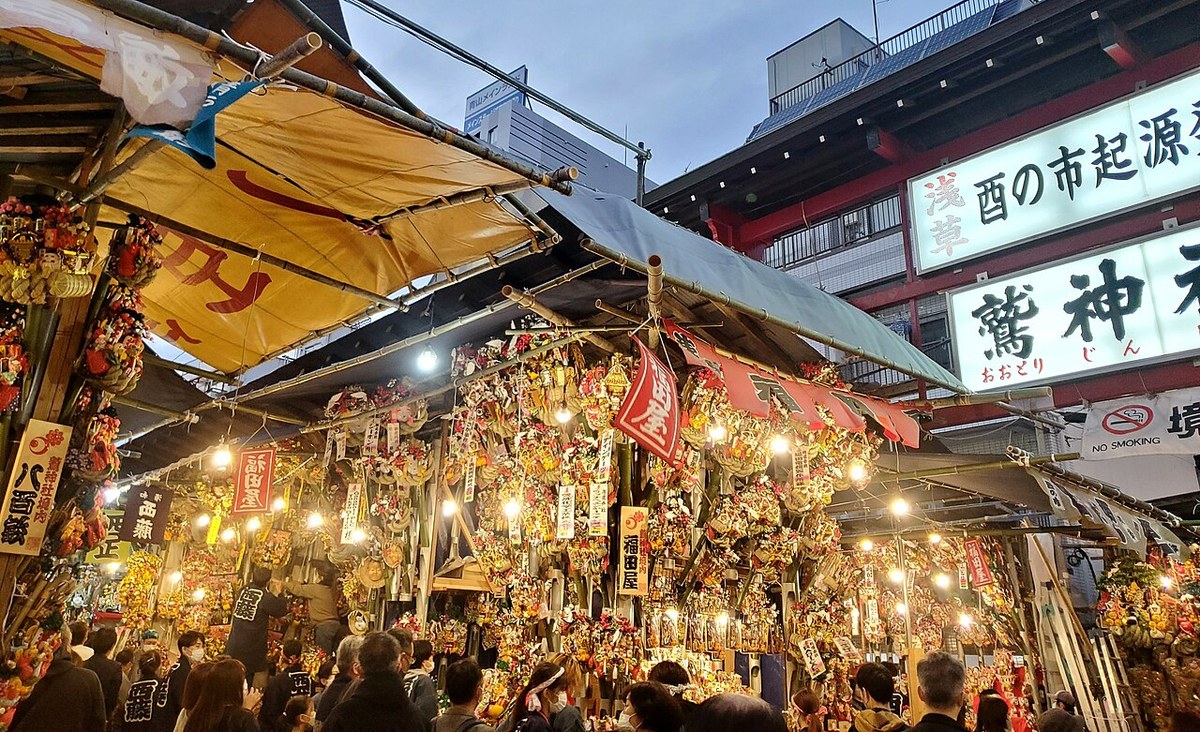
この日は、神社を中心に、熊手を売る店が約150店、ほかの店も約750店並ぶ。毎年70万人から80万人の人が集まり、道はとても混雑する。普段は静かな町も、お祭りの雰囲気でいっぱいになる。
熊手は、木の葉を集める道具の形をしていて、宝や運を表す色々なものが美しく飾られている。熊手で、幸せを集めるのだ。種類も多く、値段は、小さい物なら1000円ぐらいからだが、よく売れるのは2万円から5万円ぐらいの物だという。
熊手の買い方には、昔からの習慣がある。お客さんは店の人と話して、値段を値切る。そして、安くなった分のお金を、お礼として店に置いていく。実際には最初の値段で買うのと同じだが、どちらもこのやり取りを楽しむのだ。買う物が決まると、店の人たちが大きな声を出し、手をたたいて祝ってくれる。
また、「三の酉まである年は火事が多い」という言い伝えもある。寒くて空気が乾く季節に、火の用心をするようにという意味だという説がある。今年は二の酉までだが、火事を防ぐために、火にはいつも注意したい。
Words in this article
The 49 words at JLPT N3 or above, and the specialist words that are on no JLPT list.
| Word | Reading | Meaning | JLPT |
|---|---|---|---|
| 伝統的 | でんとうてき | traditional | Not on JLPT lists |
| 人気 | にんき | popularity | N3 |
| 中心 | ちゅうしん | center | N3 |
| 混雑する | こんざつする | to be crowded | N3 from 混雑 |
| 普段 | ふだん | usually; normally | N3 |
| 雰囲気 | ふんいき | atmosphere; mood | N3 |
| 宝 | たから | treasure | N3 |
| 運 | うん | luck; fortune | N3 |
| 表す | あらわす | to stand for; to express | N3 |
| 種類 | しゅるい | kind; type | N3 |
| 実際 | じっさい | in reality; actually | N3 |
| には | (in; for) | Not on JLPT lists | |
| やり取り | やりとり | exchange; back-and-forth | Not on JLPT lists |
| 用心 | ようじん | care; caution (火の用心 = watch out for fire) | N3 |
| 説 | せつ | theory; view | N3 |
| 防ぐ | ふせぐ | to prevent | N3 |
| をする | to do | Not on JLPT lists | |
| いくつか | some; several | Not on JLPT lists | |
| 商売 | しょうばい | business; trade | N3 |
| うまくいく | to go well | Not on JLPT lists | |
| 幸せ | しあわせ | happiness; good fortune | N3 |
| 願う | ねがう | to wish for; to pray for | N3 |
| 江戸時代 | えどじだい | Edo Period (1603-1868) | Not on JLPT lists |
| 中でも | なかでも | among them; above all | Not on JLPT lists |
| のが | the one that | Not on JLPT lists | |
| 浅草 | あさくさ | Asakusa (an old district of Tokyo) | Not on JLPT lists |
| 鷲神社 | おおとりじんじゃ | Otori Shrine (in Asakusa) | Not on JLPT lists |
| 酉の日 | とりのひ | Day of the Rooster (in the old twelve-day calendar cycle) | Not on JLPT lists |
| 一の酉 | いちのとり | Ichi-no-tori (the fair's first Rooster day) | Not on JLPT lists |
| 二の酉 | にのとり | Ni-no-tori (the fair's second Rooster day) | Not on JLPT lists |
| 一日中 | いちにちじゅう | all day long | Not on JLPT lists |
| 熊手 | くまで | kumade (a decorated bamboo rake, a good-luck charm) | Not on JLPT lists |
| 約 | やく | about; approximately | N3 |
| 集まり | あつまり | gather, and (from 集まる) | N3 |
| 木の葉 | このは | leaves (of trees) | Not on JLPT lists |
| していて | has (a shape), and (from する) | Not on JLPT lists | |
| もの | thing | Not on JLPT lists | |
| なら | if (it is) | Not on JLPT lists | |
| 売れる | うれる | to sell (well); to be sold | N3 |
| 買い方 | かいかた | way of buying | Not on JLPT lists |
| お客さん | おきゃくさん | customer | Not on JLPT lists |
| 値切る | ねぎる | to bargain down (a price) | Not on JLPT lists |
| 置いていく | おいていく | to leave (something) behind | Not on JLPT lists |
| 人たち | ひとたち | people | Not on JLPT lists |
| 出し | だし | let out, and (from 出す) | Not on JLPT lists |
| たたいて | clapping (from たたく) | Not on JLPT lists | |
| 祝って | いわって | celebrating (from 祝う) | N3 from 祝う |
| 三の酉 | さんのとり | San-no-tori (the fair's third Rooster day) | Not on JLPT lists |
| 言い伝え | いいつたえ | old saying; legend | Not on JLPT lists |
79 more words from lower levels, plus names, numbers and grammar
| Word | Reading | Meaning | JLPT |
|---|---|---|---|
| な | (links a na-adjective) | Grammar | |
| は | (topic marker) | Grammar | |
| に | in; at; to | Grammar | |
| とても | very | N5 | |
| 静か | しずか | quiet | N5 |
| 町 | まち | town; neighborhood | N5 |
| 多く | おおく | many (and) | N5 from 多い |
| 最初 | さいしょ | first; beginning | N4 |
| 同じ | おなじ | same | N5 |
| 楽しむ | たのしむ | to enjoy | N4 |
| ために | in order to | Grammar | |
| という | that; called | Grammar | |
| なると | when it becomes; when (it) comes | N5 from なる | |
| 東京 | とうきょう | Tokyo | Name |
| 神社 | じんじゃ | Shinto shrine | N4 |
| 酉の市 | とりのいち | Tori-no-ichi (rooster-day fair held at shrines in November) | Name |
| という | called; named | Grammar | |
| お祭り | おまつり | festival | N4 |
| 開かれる | ひらかれる | to be held (passive of 開く) | N4 from 開く |
| こと | thing; that (something happens) | Grammar | |
| 家族 | かぞく | family | N5 |
| 続いている | つづいている | has continued (from 続く) | N4 from 続く |
| いちばん | the most | N5 | |
| ある | there is; to have | N5 | |
| 今年 | ことし | this year | N5 |
| どちら | which; either (of the two) | N5 | |
| から | from | Grammar | |
| まで | until; to | Grammar | |
| 入る | はいる | to enter; to go in | N5 |
| ことができる | can (do) | Grammar | |
| 売る | うる | to sell | N5 |
| 店 | みせ | shop; stall | N5 |
| 150店 | ひゃくごじゅってん | 150 shops | Number |
| ほか | other | N5 | |
| 750店 | ななひゃくごじゅってん | 750 shops | Number |
| 並ぶ | ならぶ | to line up; to stand in a row | N5 |
| 毎年 | まいとし | every year | N5 |
| 道 | みち | road; street | N5 |
| なる | to become | N5 | |
| 集める | あつめる | to gather; to collect | N4 |
| 道具 | どうぐ | tool | N4 |
| 形 | かたち | shape; form | N4 |
| 色々 | いろいろ | various; all kinds of | N5 |
| 美しく | うつくしく | beautifully (from 美しい) | N4 from 美しい |
| 飾られている | かざられている | is decorated (from 飾る) | N4 from 飾る |
| で | with; by means of | Grammar | |
| のだ | (explains: that is why; it is that) | Grammar | |
| 値段 | ねだん | price | N4 |
| 小さい | ちいさい | small | N5 |
| 物 | もの | thing; item | N5 |
| ぐらい | about; around | Grammar | |
| よく | often; well | N5 | |
| だという | it is said that | Grammar | |
| 昔 | むかし | the old days; long ago | N4 |
| 習慣 | しゅうかん | custom; habit | N4 |
| ある | there is | N5 | |
| 話して | はなして | talking (from 話す) | N5 from 話す |
| そして | and then | N5 | |
| 安くなった | やすくなった | became cheaper (from 安い + なる) | N5 from 安い |
| お金 | おかね | money | N5 |
| お礼 | おれい | thanks; a gift of thanks | N4 |
| として | as | Grammar | |
| 買う | かう | to buy | N5 |
| 決まる | きまる | to be decided | N4 |
| 大きな | おおきな | big; loud | N5 |
| 声 | こえ | voice | N5 |
| 手 | て | hand | N5 |
| くれる | to do (something) for someone | N4 | |
| また | also; and | N5 | |
| 火事 | かじ | fire (a building on fire) | N4 |
| 多い | おおい | many; frequent | N5 |
| 寒くて | さむくて | cold, and (from 寒い) | N5 from 寒い |
| 空気 | くうき | air | N4 |
| 乾く | かわく | to get dry | N4 |
| 季節 | きせつ | season | N4 |
| 火 | ひ | fire | N4 |
| 意味 | いみ | meaning | N5 |
| いつも | always | N5 | |
| 注意したい | ちゅういしたい | want to be careful | N4 from 注意 |
Questions
Try answering in Japanese, then open the answer to check yourself. In the reader, your answers and score are saved.
- 酉の市は、どんなことを願うお祭りですか。
Show answer
商売がうまくいくことや、家族の幸せを願う伝統的なお祭りです。
It is a festival where people wish for good business and their family's happiness.
- 今年の浅草の酉の市は、いつ開かれますか。
Show answer
11月7日の「一の酉」と、19日の「二の酉」です。どちらの日も、0時から24時までです。
On November 7 (the first Rooster day) and November 19 (the second). Both days run from 0:00 to 24:00.
- 熊手には、どんな意味がありますか。
Show answer
熊手で、幸せを集めるという意味があります。
It means gathering happiness with the kumade.
- 昔からの熊手の買い方は、どんな買い方ですか。
Show answer
お客さんは店の人と話して値段を値切って、安くなった分のお金を、お礼として店に置いていきます。買う物が決まると、店の人たちが手をたたいて祝ってくれます。
Customers bargain the price down, then leave the money they saved at the shop as thanks. When the purchase is decided, the shop staff clap their hands to celebrate.
- 「三の酉まである年は火事が多い」という言い伝えには、どんな意味があるという説がありますか。
Show answer
寒くて空気が乾く季節に、火の用心をするようにという意味だという説があります。
One theory is that it is a reminder to watch out for fire in the cold, dry season.
- あなたの国にも、一年の幸せを願うお祭りや市がありますか。どんなものですか。
Example answer
わたしの国では、新しい年の前に大きな市があって、家族の幸せを願って花を買います。
In my country there is a big market before the new year, and people buy flowers to wish for their family's happiness.
If you're new to Japanese, the Textbook teaches it step by step from zero. If you can't read kana yet, start with Starter.
Start from zero Lesson 1 (N5)More N3 reading
- 白菜が高い、鍋の季節なのに 2026年11月17日
- インフルエンザが、今年は早くから広がっている 2026年11月11日
- 寒い季節の前に、火事に注意しよう 2026年11月10日
- 紅葉の様子を、情報で確かめてから公園へ 2026年11月9日
- AIが、ごみの瓶を分ける 2026年11月8日
- 風邪に、抗菌薬は効きません 2026年11月7日